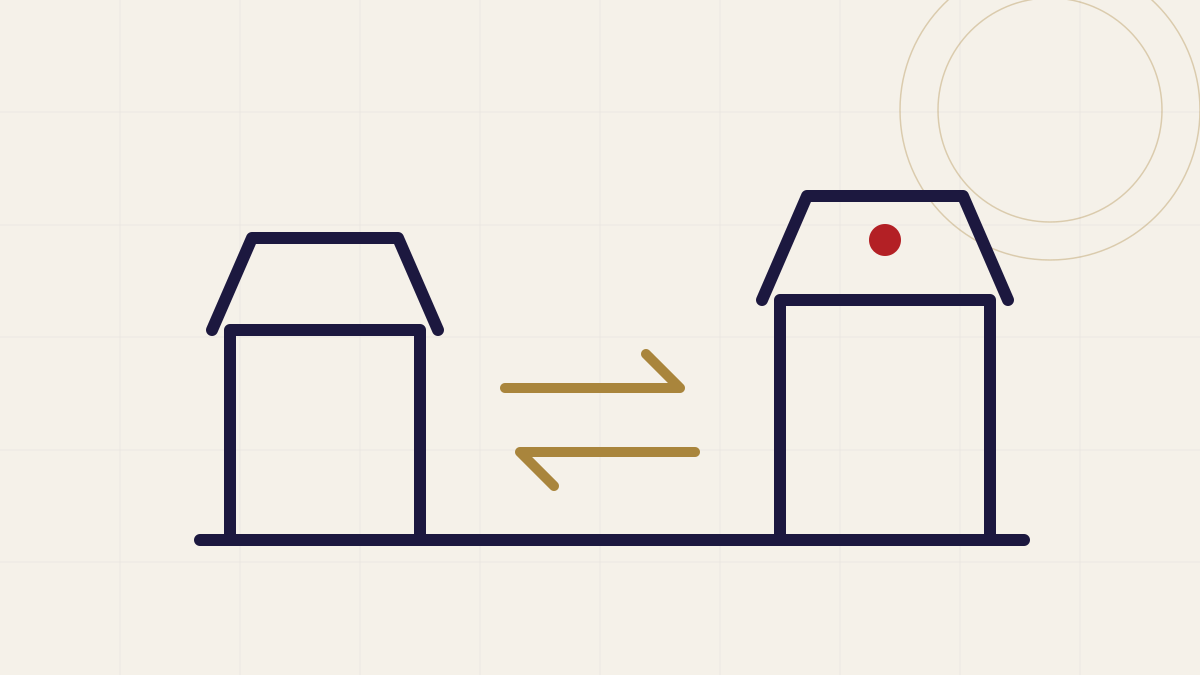
- The gap between signing and closing exists because most deals have conditions to satisfy first — third-party consents, landlord approvals, financing, or in larger deals, regulatory clearances.
- The purchase agreement is signed, with representations, warranties, and covenants fixed as of that date.
Signing a purchase agreement and closing the deal are rarely the same day. Between the two, weeks can pass while conditions are satisfied, consents are obtained, and financing comes together. A bring-down certificate is the document that bridges that gap — a certificate the seller (and sometimes the buyer) signs at closing, confirming that everything promised at signing is still true.
If you are buying or selling a business in Ontario, understanding what this certificate confirms — and what it means if it cannot be signed without qualification — helps you see why the days right before closing matter as much as the negotiation itself.
What a Bring-Down Certificate Confirms
At its core, a bring-down certificate is a short, formal statement — typically signed by an officer or director of the corporation, or by the seller personally — confirming two things as of the closing date:
- The representations and warranties in the purchase agreement remain true and correct — either exactly as stated at signing, or true in all material respects, depending on how the agreement is drafted.
- All covenants and closing obligations the seller was required to perform between signing and closing have in fact been performed.
In effect, it "brings down" the representations from the signing date to the closing date, confirming nothing material has changed in between. Without it, a buyer closing weeks after signing would have no formal reassurance that the business it agreed to buy is the same business it is now paying for.
Why It's Signed at Closing, Not at Signing
The gap between signing and closing exists because most deals have conditions to satisfy first — third-party consents, landlord approvals, financing, or in larger deals, regulatory clearances. During that gap, the business keeps operating, which means facts can change: a key customer contract could end, an employee could leave, a piece of equipment could break down.
The purchase agreement typically makes it a condition of closing that the representations remain true as of the closing date (not just as of signing) and that all pre-closing covenants have been satisfied. The bring-down certificate is how the seller formally confirms — and takes accountability for — that condition being met, right at the moment the deal actually closes.
The Bring-Down as a Step in the Closing Sequence
A typical sequence looks like this:
- Signing. The purchase agreement is signed, with representations, warranties, and covenants fixed as of that date.
- The interim period. The seller operates the business under agreed covenants (often restricting major decisions without buyer consent) while closing conditions — consents, financing, due diligence follow-ups — are worked through.
- Pre-closing confirmation. Shortly before the scheduled closing date, the parties confirm that all conditions are satisfied or will be by closing.
- The bring-down certificate is signed at closing, confirming the representations remain true and the covenants have been performed.
- Funds and documents are released, and the transaction closes.
This sequencing is why the certificate is sometimes described as the last checkpoint before money moves — it is the seller's final, formal word on the state of the business before the buyer commits.
What Happens If Something Has Changed
If a fact has genuinely changed since signing — a material contract was lost, a lawsuit was filed, equipment was damaged — the seller generally cannot sign a clean bring-down certificate without qualifying it, and doing so anyway can itself create liability.
Depending on how the agreement is drafted, a change serious enough to make a representation no longer true can:
- Give the buyer the right to refuse to close, if the truth of the representations at closing is itself a condition to the buyer's obligation.
- Trigger a negotiation over a price adjustment, an indemnity, or additional seller commitments in exchange for the buyer proceeding anyway.
- Become the basis of a post-closing indemnity claim, if the parties close regardless and the issue is disclosed and priced into the deal, or if it surfaces only after closing.
Which outcome applies depends entirely on how the specific purchase agreement defines its closing conditions and indemnity provisions — there is no default answer, which is exactly why these clauses need careful drafting rather than reliance on a generic template.
What a Bring-Down Certificate Usually Covers
- Confirmation that representations and warranties remain true (exactly, or in all material respects) as of the closing date
- Confirmation that all covenants required before closing have been performed
- Confirmation that no event has occurred that would constitute a Material Adverse Effect, where the agreement uses that concept
- Confirmation of the signing officer's or seller's authority to give the certificate
- Sometimes, a matching certificate from the buyer confirming its own pre-closing obligations were met
Frequently asked questions
Does the buyer sign a bring-down certificate too?
It depends on the agreement. Buyer covenants before closing are usually narrower than seller covenants (the seller is the one running the business), but where the buyer has pre-closing obligations — arranging financing, obtaining its own approvals — the agreement may require a reciprocal certificate from the buyer as well.
What if the seller refuses to sign the certificate?
A seller's refusal (or inability to sign it without qualification) generally signals that a closing condition cannot be satisfied, which puts the deal itself at risk. This is a serious moment in a transaction and should be handled with your lawyer immediately rather than through informal reassurances between the parties.
Is a bring-down certificate the same as the closing statement?
No. A bring-down certificate addresses the truth of representations and performance of covenants. A closing statement (or working-capital statement) is a financial document used to calculate purchase price adjustments. Both are typically signed around the same time, but they serve different purposes.
Can a bring-down certificate be qualified rather than an outright "yes"?
Yes, and this happens in practice. A seller can disclose a specific change and ask the buyer to close anyway, often alongside a price adjustment or a specific indemnity addressing that issue. What matters is that the change is disclosed honestly before closing, not glossed over in the certificate.
Official resources
Government and regulator sources for this topic. Rules change — confirm the current position before you rely on it.
This is a business purchase or sale question
Start a file online — flat, published fees, reviewed by a licensed lawyer before a dollar is owed.