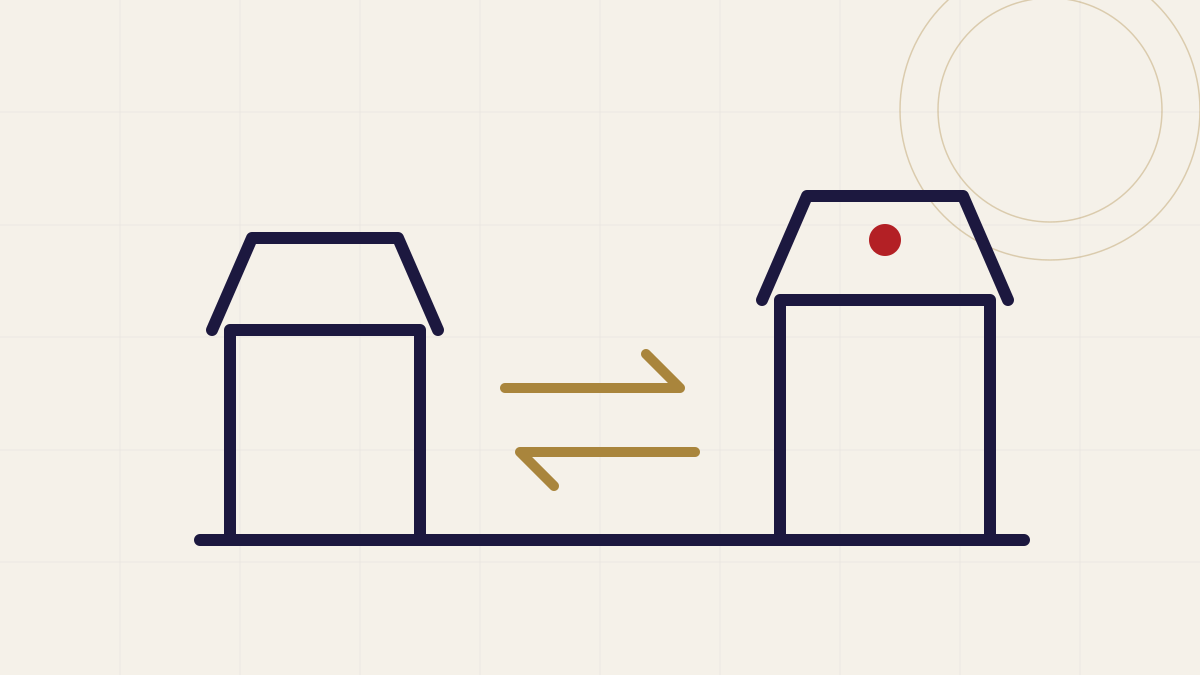
- The intercompany loan route: Holdco borrows from the lender and then re-lends some or all of the proceeds down to Opco, documented with its own intercompany promissory note (and, in many deals, its own security agreement between Holdco and Opco).
When an Ontario buyer sets up to purchase a business, the entity that signs the loan documents is often not the entity that runs the business day to day. Instead, the buyer incorporates a holding company ("Holdco"), which owns the shares of the operating company ("Opco") — the business being purchased or the newco that holds its assets. That split raises a practical question buyers ask early: if the bank's money goes to Holdco, how does it actually reach the business Holdco is buying?
The short answer is that it depends on how the deal is structured, and the route the money takes has real consequences for security, guarantees, and — eventually — tax. This article walks through the two common ways financing moves from Holdco to Opco, and what a lender typically wants to see regardless of the route chosen.
Why a Holdco Sits Above the Operating Business at All
Buyers use a holdco structure for reasons that go beyond the financing itself:
- Separating risk. Keeping the acquisition debt and the buyer's personal exposure at the Holdco level, one step removed from day-to-day operating liabilities.
- Flexibility for the future. A holdco can make it easier to reorganize, bring in investors, or eventually sell shares of Opco (or Holdco) without unwinding the operating business itself.
- Consolidating multiple investments. Buyers who already own, or plan to acquire, more than one operating business sometimes use a single holdco as the common parent.
None of this changes the basic problem: the loan is typically advanced to Holdco, and the business — with its revenue, assets, and cash flow — sits inside Opco.
Two Common Ways the Financing Reaches Opco
1. The intercompany loan route
Holdco borrows from the lender and then re-lends some or all of the proceeds down to Opco, documented with its own intercompany promissory note (and, in many deals, its own security agreement between Holdco and Opco). Opco then uses those funds directly — for example, to pay part of the purchase price for assets it is acquiring, or to fund working capital. This route creates a clear paper trail showing the money physically moving into the operating business.
2. The share-purchase-plus-security route
In many share purchases, Holdco uses the loan proceeds to pay the seller directly for the shares of Opco — the money never passes through Opco's own bank account at all. Because Opco itself didn't receive any cash, the lender instead looks to Opco's ongoing business to support repayment indirectly, by requiring:
- A guarantee from Opco of Holdco's debt, and
- Security registered against Opco's own assets — typically a general security agreement registered under the Personal Property Security Act, R.S.O. 1990, c. P.10 (PPSA) — even though Opco never touched the loan proceeds itself.
Both routes are common in Ontario acquisitions, and the choice often comes down to whether the deal is structured as an asset purchase (where Opco, or a newco, is the one actually buying assets and can use funds directly) or a share purchase (where the money goes to the seller for the shares, and Opco's guarantee and security do the rest of the work).
What a Lender Wants to See Either Way
Regardless of which route is used, a senior lender will typically insist on:
- Security over Opco's assets (registered under the PPSA), not just Holdco's shares in Opco
- A guarantee from Opco, properly authorized by its own board of directors
- Confirmation that dividends can flow up from Opco to Holdco to service the loan, without being blocked by other creditor arrangements
- Corporate authorizations showing Opco's board turned its mind to approving a guarantee or security interest for a debt that primarily benefited its new shareholder rather than Opco itself — a governance step your lawyer builds into the closing documents
Because Opco is being asked to stand behind debt it may not have directly received, lenders are often particular about seeing these authorizations done properly and in the right order relative to closing.
Where This Structure Often Leads Next
A Holdco-Opco split with an intercompany loan or an upstream guarantee is frequently just the starting position. Once the deal has closed and the dust has settled, many buyers look at whether it makes sense to combine Holdco and the operating company into a single entity, so the acquisition debt sits directly on the business that generates the cash to repay it, rather than one level removed. That's a separate legal and tax step, done deliberately and with its own set of considerations — not something to assume will happen automatically.
Frequently asked questions
Does Opco ever actually receive the loan money?
Sometimes, and sometimes not. In an asset purchase where Opco (or a newco) is the buyer, the funds are often used directly by that entity. In a share purchase, the loan proceeds frequently go straight to the seller, and Opco's role is to guarantee the debt and provide security rather than to receive cash itself.
Can Opco be required to guarantee a loan it never directly received?
Yes — this is common where a holdco borrows to buy Opco's shares. Lenders typically want Opco's assets and cash flow behind the debt regardless of which entity technically received the funds, and Opco's board needs to formally authorize that guarantee and any security given.
Does using a holdco change whether interest on the loan is tax-deductible?
It can affect the analysis. Interest deductibility under Canadian tax law depends on how the borrowed funds are actually used and the income-earning purpose behind the loan, and the answer differs depending on whether an individual borrows personally or a holdco borrows to fund the purchase. Confirm the specifics with an accountant or tax lawyer before assuming a particular structure is more tax-efficient.
Is a holdco-opco structure required to buy a business in Ontario?
No. Some buyers purchase a business directly, or through a single operating corporation, without a separate holding company. Whether a holdco makes sense depends on your goals, your lender's requirements, and tax planning specific to your situation.
Sources
- Personal Property Security Act — Ontario e-Laws
Links go to the official consolidated text. Legislation changes — confirm you are reading the current version.
This is a business purchase or sale question
Start a file online — flat, published fees, reviewed by a licensed lawyer before a dollar is owed.