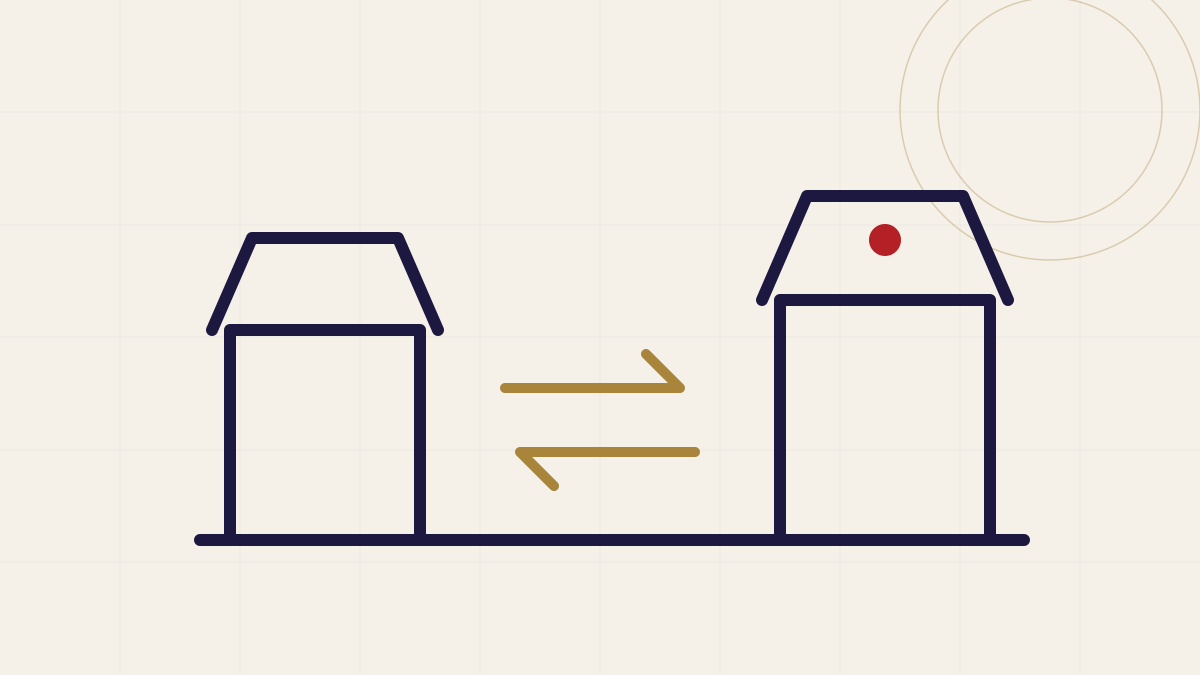
- The same headline price can leave the seller with very different after-tax money depending on whether shares or assets are sold.
- The lifetime capital gains exemption can apply to qualifying shares owned by an individual, but not to an asset sale by the corporation.
- Buyers and sellers should compare deals on a net basis, including transfer tax, GST/HST and inherited liabilities, not on the headline number.
When a buyer and seller agree on a number, it is easy to assume the price is settled. In practice, a price for shares and a price for assets are not the same thing, even if the figure written on the page is identical.
This article looks only at how the structure of the deal moves the real price for each side. It does not walk through every difference between the two structures. A lawyer and an accountant can model your own numbers before you commit to a figure.
This article covers the law of New Brunswick.
Why the same headline price is not the same deal
In a share sale, the deal is between the shareholders and the buyer, and the company stays the same legal entity, so the buyer takes it with its past liabilities inside the company. In an asset sale of a whole incorporated business, the seller's shareholders generally have to approve the sale by special resolution.
Those differences feed into price. Each side ends up with different tax results, different risks and different costs, so a seller may accept less for shares than for assets, and a buyer may offer less for shares because of what comes with the company.
The seller's side: the capital gains exemption
The lifetime capital gains exemption can apply to a gain on qualified small business corporation shares owned by an individual, but it does not apply to an asset sale by the corporation. This is a main reason sellers prefer a share sale.
The exemption has conditions. The shares must be shares of a Canadian-controlled private corporation, and more than 50% of the fair market value of its assets must be attributable to active business assets or qualifying connected-corporation shares or debt during the relevant periods. The shares also must not have been owned by anyone outside the individual's related group throughout the 24 months immediately preceding the determination time.
CRA states the exemption is $1,250,000 for dispositions of qualifying property in 2025, and that the limit is indexed to inflation. The amount for a later year may differ, so confirm the current figure before you rely on it.
The buyer's side: liabilities, lost benefits and extra costs
A buyer who purchases shares takes the company with its past liabilities inside it. A buyer who purchases assets does not take the company itself, which is why buyers often value an asset deal more highly or ask for a lower share price to reflect the risk. Whether a buyer also gives up tax benefits in a share deal, such as a higher tax cost for the assets, depends on the facts and is something an accountant should model.
Some costs only show up in an asset deal. Real property transfer tax is 1% of the greater of the consideration or the assessed value for deeds tendered on or after April 1, 2016, and it is charged when a deed is registered, so it can arise if land or buildings are transferred in an asset sale. A share sale does not register a deed. Some instruments are exempt, such as a lease for a term of less than twenty-five years or a deed given only to secure a debt or loan.
Employees also matter to price. In a sale of a business, an employee's period of employment is deemed to be with the purchaser and continuity of employment is deemed unbroken, so the buyer inherits service for notice and similar entitlements, including in an asset sale.
Price allocation and GST/HST
In an asset sale you buy specific assets, such as equipment, inventory and land, and the total price is divided among them. How that split is made can change the tax each side pays and the transfer tax on any land, so it is worth negotiating on purpose rather than leaving it to the end. An accountant can explain the tax effects for your situation.
GST/HST can also affect the real cost. The buyer and seller may jointly elect so no GST/HST is payable on the sale of a business or part of it, if the buyer acquires all or substantially all the property reasonably necessary to carry it on. The recipient files the election with the Minister, if it is a registrant, by the day on or before which its return for its first reporting period is due, unless the Minister allows a later date.
The election cannot be made where the supplier is a registrant and the recipient is not. Even when it applies, tax is still payable on taxable services to be rendered by the supplier, taxable leases or licences, and taxable sales of real property where the recipient is not a registrant.
Comparing offers fairly: what to do next
- Ask each side's accountant to show the seller's after-tax proceeds under both a share sale and an asset sale.
- Check whether the seller's shares might qualify for the capital gains exemption, including the 24-month holding test.
- Search the seller's name in the PPSA Registry to find registered security interests before closing.
- List any land or buildings and estimate real property transfer tax.
- Decide whether the GST/HST election is available and who will file it.
- Confirm that your lawyer is a practising member of the Law Society of New Brunswick.
If the business owns land, a lawyer is needed to register the transfer in an asset deal. Get legal and tax advice before you settle on a price.
Frequently asked questions
Does an asset sale or a share sale usually give the seller more money?
It depends on the facts, but sellers often prefer a share sale because the lifetime capital gains exemption can apply to qualifying shares owned by an individual and not to an asset sale by the corporation. An accountant can compare the after-tax results for your own situation.
Is the capital gains exemption a fixed amount?
No. CRA states the limit is $1,250,000 for dispositions of qualifying property in 2025, and that it is indexed to inflation. Check the current figure for the year of your sale.
Do I pay land transfer tax if I buy shares?
A share sale does not register a deed, so the real property transfer tax that is charged on deed registration does not arise on the shares themselves. In an asset sale that includes land or buildings, the tax is 1% of the greater of the consideration or the assessed value for deeds tendered on or after April 1, 2016.
Can the GST/HST be avoided on a business sale?
Sometimes. The buyer and seller may jointly elect so no GST/HST is payable if the buyer acquires all or substantially all the property reasonably necessary to carry on the business. There are exceptions, so have an accountant confirm it applies.
Sources
- Business Corporations Act (NB), s. 130 — laws.gnb.ca
- Personal Property Security Act (NB), s. 48 — laws.gnb.ca
- Employment Standards Act (NB), s. 89 — laws.gnb.ca
- Real Property Transfer Tax Act (NB), s. 2(1.03) — laws.gnb.ca
- Excise Tax Act, s. 167 — Justice Laws (federal)
- Income Tax Act, s. 110.6(1) — Justice Laws (federal)
- CRA – Line 25400 Capital gains deduction — canada.ca
- Law Society of New Brunswick – Definitions (public) — lawsociety-barreau.nb.ca
Links go to official government, court and regulator pages. The law changes — confirm you are reading the current version.
This is a buying & selling a business question
Buying or selling a business with us is from $3,448.85, tax included. Third-party fees are extra.